How to Explore Desert Landscapes Safely
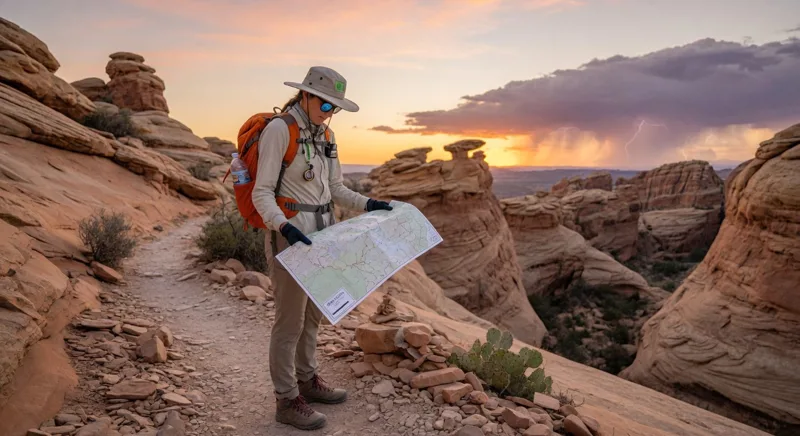
Deserts offer dramatic scenery, quiet trails, and unforgettable adventures—but their beauty comes with serious risks. Learning how to explore desert landscapes safely means planning for extreme heat, limited water, sudden storms, rugged terrain, and unreliable phone service before you set out.
Research the Desert Before You Go
Desert conditions can change quickly, and a route that looks easy on a map may involve deep sand, steep rock, exposed ridges, or narrow canyons. Start by checking official park alerts, trail closures, road conditions, weather forecasts, and recent reports from park staff.
Choose a route that matches your experience, fitness, vehicle, and available time. If you are new to desert hiking, begin with a short, well-marked trail near a visitor center rather than attempting a remote backcountry route.
- Study the trail distance, elevation gain, terrain, and shade availability.
- Check whether permits, reservations, or a high-clearance vehicle are required.
- Download offline maps because mobile service may disappear.
- Tell someone your route, starting time, expected return, and emergency plan.
- Check sunrise, sunset, heat advisories, and storm forecasts.
Plan Water, Food, and Timing Carefully
Water is the foundation of desert safety. Do not assume that springs, pools, or map-marked water sources are reliable or safe to drink. For many front-country desert hikes, park guidance recommends carrying at least 2 to 3 liters per person; remote or longer trips may require 4 liters or more, depending on distance, weather, exertion, and local regulations.[1]
Drink regularly and do not wait until you feel severely thirsty. Pack additional water for delays, navigation mistakes, vehicle problems, or an unexpectedly slow hike. Electrolyte drinks or salty snacks can help during prolonged exertion, but they do not replace adequate water.
The safest time to hike is usually early morning or later in the afternoon, avoiding the hottest part of the day. In extreme heat, postpone the trip rather than relying on determination or athletic ability.
Pack a Desert Hiking Safety Kit
- Extra water and electrolyte supplies
- Wide-brimmed hat, sunglasses, sunscreen, and breathable layers
- Long-sleeved shirt and lightweight long pants for sun and thorn protection
- Sturdy hiking shoes with good traction
- Detailed map, compass, and fully charged phone with offline navigation
- First-aid kit, blister treatment, and personal medications
- Headlamp, whistle, emergency blanket, and fire-safe emergency supplies
- Food that remains stable in high temperatures
Recognize and Prevent Heat Illness
Heat exhaustion can begin with headache, weakness, dizziness, nausea, muscle cramps, heavy sweating, or unusual fatigue. If these symptoms appear, stop immediately, move into shade, loosen excess clothing, cool the person, and provide fluids if they are alert and able to drink.[1][3]
Confusion, fainting, seizures, loss of coordination, or very hot skin can signal life-threatening heat stroke. Treat this as an emergency and contact local emergency services immediately. Do not continue hiking to “reach the next landmark.”
Acclimatization matters, especially for travelers arriving from cooler climates. Keep early outings short, reduce your pace, take frequent shade breaks, and increase effort gradually. Children, older adults, and people with certain medical conditions may be particularly vulnerable to heat.
Watch for Flash Floods and Changing Weather
Rain may fall miles away from your location and still send a wall of water through a dry wash or canyon. Flash floods can occur even when the sky above you appears clear. Avoid narrow canyons, slot canyons, and low-lying washes when thunderstorms are forecast.
If you notice rising water, floating debris, muddy water, a sudden roar, or distant thunder, move to higher ground immediately. Never attempt to cross a flooded wash; even shallow, fast-moving water can knock a person off their feet.[1][2]
Navigate Without Damaging the Landscape
Desert terrain often lacks obvious landmarks. A trail can fade into rock, gravel, or sand, while heat and fatigue can make a short return journey feel much longer. Track your location, turn around before your water supply becomes limited, and avoid taking shortcuts that increase the chance of getting lost.
Follow marked routes and established roads whenever possible. Desert soils, including biological soil crusts, can take years to recover from footsteps or vehicle tires. Leave plants, fossils, rocks, and cultural artifacts where you find them, and pack out every item of waste.
Stay Safe Around Wildlife and Vehicles
Give snakes, scorpions, spiders, and other wildlife plenty of space. Watch where you place your hands and feet, avoid reaching into cracks, and shake out shoes or clothing that have been left on the ground. Never handle unfamiliar plants or animals.
If you are driving, carry extra fuel where permitted, inspect tires, and avoid remote roads beyond your vehicle’s capability. Do not rely on a rental vehicle’s standard roadside assistance in isolated terrain. Park completely off travel lanes and keep the vehicle facing an exit route when practical.
Know When to Turn Back
The most important desert hiking skill is recognizing when conditions have changed. Turn around if water is running low, temperatures rise unexpectedly, clouds build over a canyon, someone becomes confused or unsteady, or navigation becomes uncertain.
Exploring desert landscapes safely is not about eliminating adventure; it is about giving yourself enough margin for the unexpected. Check conditions, carry more preparation than you think you need, respect the environment, and choose a conservative route. With those habits, desert travel can be both thrilling and responsible.
You May Also Like
 Travel
When Tourism Helps Protect Fragile Places
 Travel
Citizen Science Trips That Welcome Travelers
 Travel
How to Choose Responsible Nature Experiences